A COMMUNITY FOR PATIENTS LIVING WITH GLAUCOMA
The Glaucoma Club
Glaucoma is not cured, it is managed, and it is managed for life. The Glaucoma Club at St Joseph’s Eye Hospital Mgbirichi exists so that nobody has to do that alone.
What the Glaucoma Club is
The Glaucoma Club is a patient support group for people living with glaucoma, and for the families who care for them. It brings patients together with our ophthalmologists, nurses, and counsellors on a regular basis to learn, to ask questions, and to meet other people carrying the same diagnosis.
It exists because glaucoma is unlike most eye conditions. There is no operation that ends it and no course of tablets that finishes it. Treatment is daily, indefinite, and its success depends almost entirely on what happens at home between appointments. Patients who understand their condition and keep to their drops hold on to their sight. Patients who do not lose it do so quietly, and without pain to warn them.
The Club is our answer to that. It is free to attend and open to every glaucoma patient at this hospital.
Why a club, and why for this condition
Glaucoma is markedly more common in people of African descent than in other populations. It tends to begin earlier in life and to progress faster, which means that across our communities a great many people are losing sight to it while believing their eyes are perfectly well.
That belief is the problem. Chronic glaucoma is painless. It takes the outer field of vision first and leaves central sight sharp, so a person can read, recognise faces and go about their work while the damage advances year on year. By the time they notice, a substantial part of it is already gone, and gone permanently, because damaged optic nerve fibres do not heal. Treatment protects the sight that remains; it cannot return what has been lost.
It also runs in families. A parent, brother or sister with glaucoma raises your own risk substantially, and most relatives of our patients have never had their eyes tested.
Put those facts together, and you have a condition that is common, silent, hereditary, irreversible, and treated only by what a patient does at home every single day for the rest of their life. Medicine can supply the drops and the surgery. What it cannot supply on its own is understanding, routine, encouragement, and those are what a club is for.
What happens at a meeting
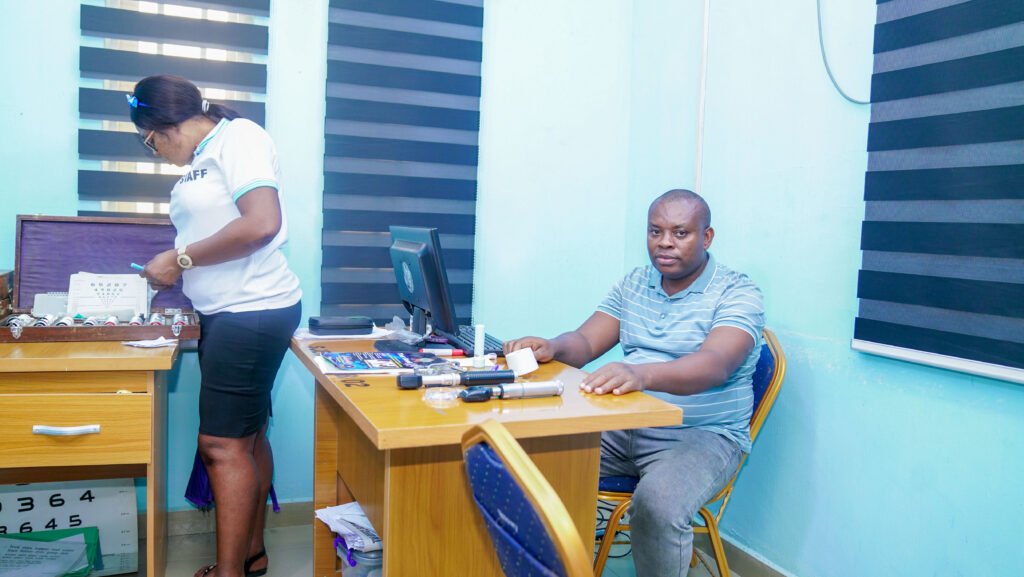
Meetings are relaxed and practical, and they are held at the hospital.
Each one usually opens with a short talk from one of our ophthalmologists or nurses on a specific topic on how the different drops work, what your pressure readings actually mean, and what to expect if surgery has been recommended. It is deliberately plain language, and it is followed by open questions. That part often runs longest, because it is the time patients finally get to ask the things there is never room for in a busy clinic, and to hear the answers given to somebody else.
We then spend time on drop technique. A surprising number of people have used eye drops for years without ever having been shown how, and are losing most of each bottle down their cheek. We demonstrate it, and we watch you do it.
The rest of the meeting belongs to the members. People talk about what has worked for them, the reminders they use, how they manage the cost of a repeat bottle, how they have adapted to sight already lost. Where it is appropriate, eye pressures are checked before people leave.
Family members are welcome at every meeting, and we would rather you brought them. They are the people who will remind you when you forget, and they carry the risk themselves.
Who can join
Membership is open to anyone under treatment for glaucoma at St Joseph’s Eye Hospital, to patients diagnosed elsewhere who would like to join us, to people being monitored as glaucoma suspects or for raised eye pressure, and to the family members and carers of any of them.
There is no fee to attend, and you do not have to be an existing patient of this hospital to come to a meeting, though we will encourage you to have your eyes properly examined here or wherever you are being followed up.
Bring your family to be tested
This is the single most useful thing a Club member can do, and it is the reason we press it at every meeting.
If you have glaucoma, your brothers, sisters and children carry a materially higher risk of developing it. Because the condition is painless, they will have no reason to suspect anything at all until sight is already gone. A first-degree relative of a glaucoma patient should have their eye pressures and optic nerves checked from around the age of 30, and regularly after that.
Your diagnosis is the warning your family will never otherwise receive. Use it.
LIVING WITH GLAUCOMA
Using your drops properly
Most treatment failure is not the medicine failing. It is drops that never reached the eye, or were stopped.
Then tilt your head back, look up, and gently pull the lower lid down to make a small pocket.
The eye cannot hold more. A second drop simply runs down the cheek and wastes an expensive bottle.
Close the eye gently for one to two minutes and press the inner corner. This keeps the medicine in the eye.
If you use more than one, leave at least five minutes between them or the second washes the first away.
It will always feel fine. That is the nature of the disease, not a sign the drops have worked.
Meals, prayers, bedtime. A fixed anchor works better than trying to remember a time.
Straight answers to what we are often asked
Can glaucoma be cured?
No. It can be controlled, and control protects the sight you still have. Anyone promising a cure is not telling you the truth.
My eyes feel fine now. Can I stop the drops?
No. Feeling fine is exactly what glaucoma does. The moment the drops stop, the pressure rises again and the damage continues.
Is glaucoma spiritual, or a curse?
It is a disease of the optic nerve, usually driven by pressure inside the eye. It is measurable, and it is treatable. Time spent seeking other explanations is sight lost permanently.
Will herbal drops or traditional medicine help?
They do not lower eye pressure, and putting unprescribed preparations into the eye can cause serious damage on its own. The greater harm, though, is the delay.
Will I go blind?
Not if the condition is found in time and treatment is kept up. Many of our members have lived with glaucoma for years with stable, useful vision.
Can surgery replace the drops?
Sometimes. Laser and surgery both lower pressure and may reduce or remove the need for drops. Your ophthalmologist will tell you whether either suits your eye.
Come in without waiting if
- You have sudden severe eye pain with redness, headache, nausea or vomiting, or you see haloes around lights, this can be acute angle-closure glaucoma, and it is an emergency
- Your vision drops suddenly
- You have run out of drops, or cannot afford the next bottle, just tell us rather than simply stopping
- The drops are causing stinging, redness, or discomfort you cannot tolerate
- You have missed your review appointment
Join the Glaucoma Club
Meetings are held at St Joseph’s Eye Hospital Mgbirichi. To find out when the next one is, to add your name to the register, or to bring a family member for testing, speak to the eye clinic on your next visit or contact the hospital.
Emergency line: (+234) 706 313 0156